ISLAMABAD: Pakistan’s Power Division has put its ambitious $36 billion circular debt refinancing plan on hold after failing to secure concessional financing from international lenders and Saudi Arabia, sources in the power sector revealed.
The plan, previously shared with World Bank and Asian Development Bank, aimed to refinance the power sector’s mounting debt over 13 years starting from FY2027. It was designed to ease the sector’s debt servicing burden and reduce electricity tariffs, particularly for industry. The proposal had also been presented to Prime Minister Shehbaz Sharif in December 2025.
Under the plan, Pakistan sought concessional loans at around 2% interest from international financial institutions (IFIs), while exploring even lower-cost financing—approximately 1%—from Saudi Arabia. However, sources indicate that IFIs have reached their exposure limits for Pakistan and are unable to extend funding on such favorable terms. While higher-interest financing remains an option, the government is reluctant to proceed under less concessional conditions.
The now-shelved roadmap outlined a structured refinancing schedule, beginning with $4.40 billion in FY2027 and gradually declining to $1.21 billion by FY2039.
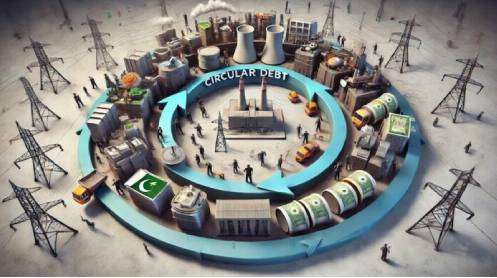
Pakistan’s power sector circular debt currently stands at approximately Rs1.9 trillion. The government aims to reduce this to Rs1.614 trillion by June 30, 2026, supported by measures including raising Rs1.225 trillion from commercial banks and continuing the recovery of a Debt Service Charge of Rs3.23 per kWh over the next six years.
According to projections, successful refinancing at concessional rates could have reduced industrial electricity tariffs to as low as 8.70 cents per kWh by FY2027, with marginal fluctuations in subsequent years. A Saudi-backed financing option at lower interest rates would have further reduced tariffs.
However, uncertainty over external financing has stalled these potential gains. Officials also noted that Saudi Arabia has yet to formally respond to the proposal, as it remains focused on evolving geopolitical developments in the Middle East.
The shelving of the refinancing plan underscores the ongoing challenges Pakistan faces in addressing its circular debt crisis and highlights the constraints posed by limited access to affordable international financing.
Story by Mushtaq Ghumman